Core Web Vitals are Google’s three measurements of how a page performs for real visitors: how fast it loads, how quickly it responds, and how stable it is while loading. A Core Web Vitals and page speed audit identifies which templates fail those measurements and what is causing the failure. Hartzer Consulting provides it as a focused engagement and as one part of a full technical SEO audit.
The Three Core Web Vitals
- Largest Contentful Paint (LCP) measures loading. It is the time until the largest image or block of text is visible. Google’s threshold for a good result is 2.5 seconds or less.
- Interaction to Next Paint (INP) measures responsiveness. It is the delay between a visitor’s click, tap, or keypress and the page’s visible response. A good result is 200 milliseconds or less.
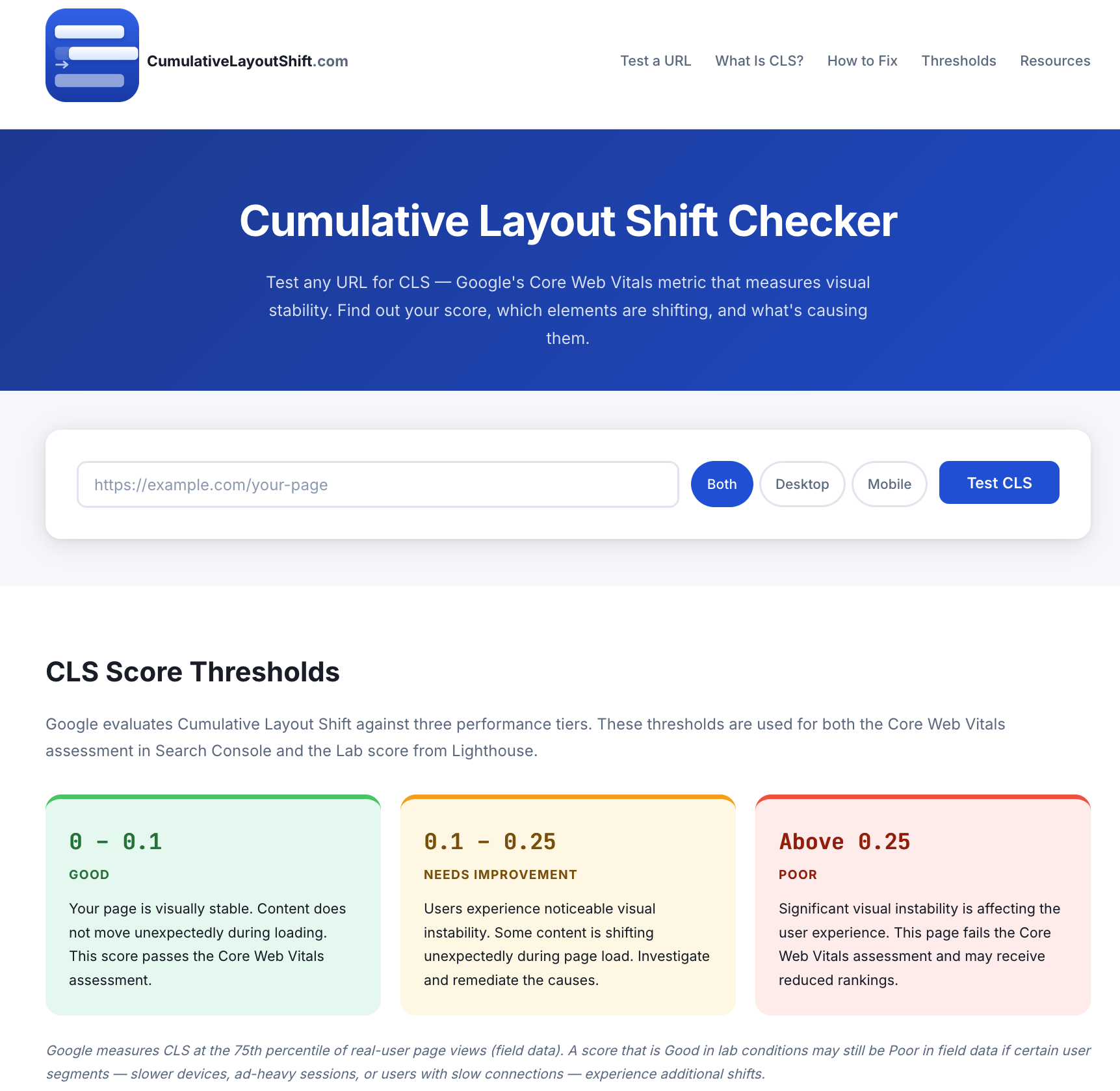
- Cumulative Layout Shift (CLS) measures visual stability. It scores how much the content moves while the page loads. A good result is 0.1 or less.
Google evaluates each measurement at the 75th percentile of real visits, which means three out of four visits must meet the threshold for a page to pass.
Field Data and Lab Data
There are two kinds of speed data, and they answer different questions. Field data comes from real Chrome users and is published in the Chrome User Experience Report. It is the data Google uses. Lab data comes from a simulated test, such as Lighthouse, run on one device and one connection. Lab data is useful for diagnosis, but a lab score is not what Google measures. A page can score well in a lab test and fail in the field, and the reverse. Hartzer Consulting starts with the field data to establish whether a real problem exists, then uses lab tests to find its cause.
How Much Speed Matters for Rankings
Hartzer Consulting gives clients a direct answer on this point. Core Web Vitals are a ranking signal, but a modest one. Improving them will not lift a page above competitors with more relevant content and stronger links. The larger benefit is commercial: slow, unstable pages lose visitors before they convert. An audit is worth doing when the field data shows a real failure, and it is rarely the first priority when a site has crawl, indexation, or content problems.
What Hartzer Consulting Examines
- Server response time. Time to first byte, hosting, caching, and content delivery network (CDN) configuration.
- The LCP element. Which image or text block it is on each template, and what delays it.
- Images. File format, dimensions, compression, lazy loading, and preloading.
- Render-blocking resources. Stylesheets and scripts that must load before anything appears.
- JavaScript. Long tasks that block the page from responding, which is the usual cause of a poor INP result.
- Third-party scripts. Analytics, advertising, chat, and consent tools, and what each one costs in load time.
- Layout shifts. Images and embeds without reserved dimensions, late-loading fonts, and banners inserted above existing content.
How the Audit Is Done
Performance problems belong to templates, not to individual pages. Bill Hartzer groups the site’s URLs by template, then pulls field data for each group from the Chrome User Experience Report and from the Core Web Vitals report in Google Search Console. Templates that fail are tested with PageSpeed Insights, WebPageTest, and the performance tools in Chrome to isolate the cause. Crawler response times are not used as a measure of speed, because a crawler measures a server under load from the crawl itself.
Common Findings
- A large hero image that is lazy loaded when it should be preloaded
- A slow server response hidden by a fast lab score from a cached test
- Tag manager containers holding scripts that nobody remembers adding
- Cookie consent banners that push the page down after it has loaded
- Web fonts that swap late and move the text
- Stylesheets loaded from other domains, which add connection time before the page can render
What the Client Receives
- A report of field data by template, showing which measurements pass and fail
- The cause of each failure, with the specific resource or element identified
- A fix list for the developers, ordered by the number of pages and visitors each fix affects
- A retest after the changes are deployed, with a note that field data takes about 28 days to reflect them
To request a Core Web Vitals audit, contact Hartzer Consulting or call +1 214 236 4378.