A page cannot rank if a search engine cannot reach it, and it cannot rank if the search engine reaches it and decides not to keep it. A crawl and indexation audit finds out which of those two things is happening, on which pages, and why. Hartzer Consulting provides it as a focused engagement and as one part of a full technical SEO audit.
Crawling and Indexation Are Two Different Problems
Crawling is discovery: a search engine’s crawler, such as Googlebot, follows links and sitemaps to request the pages of a website. Indexation is selection: the search engine decides which of the crawled pages to store and make eligible to appear in results. A page can fail at either stage, and the fixes are different. A page that is never crawled has a discovery problem. A page that is crawled and left out of the index has a quality, duplication, or directive problem.
Signs That a Site Has a Crawl or Indexation Problem
- New pages take weeks to appear in Google, or never appear
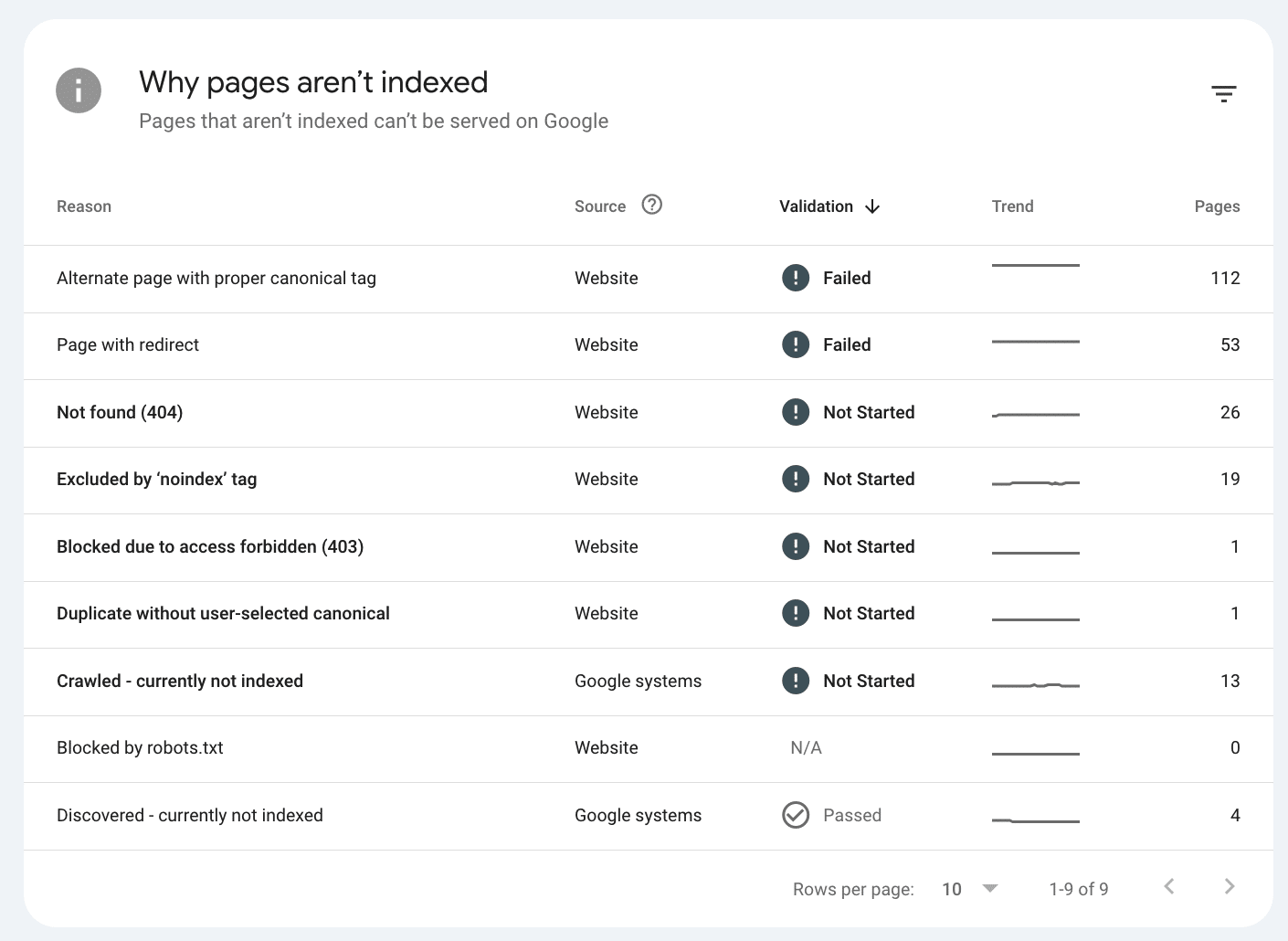
- Google Search Console reports a large number of pages as “Crawled, currently not indexed” or “Discovered, currently not indexed”
- The number of indexed pages is far higher or far lower than the number of pages the site actually has
- The wrong version of a page ranks, such as a filtered or parameter URL instead of the main page
- Traffic fell after a redesign, a platform change, or a change to robots.txt
What Hartzer Consulting Examines
- Robots.txt. Rules that block pages or resources search engines need, and rules that fail to block what should be blocked.
- XML sitemaps. Whether they list every indexable page, and only indexable pages.
- Directives. Noindex tags, canonical tags, and HTTP headers, including cases where they contradict each other.
- Response codes. Redirect chains, 404 (not found) errors, soft 404 errors, and server errors.
- Duplicate URLs. Parameters, session IDs, faceted navigation (filter and sort options that create their own URLs), pagination, and mixed use of trailing slashes, uppercase letters, and protocols.
- Internal links. Click depth, orphaned pages (pages with no internal links pointing to them), and links hidden behind scripts or forms.
- Crawl budget. On large sites, how much of Googlebot’s activity is spent on URLs that have no value.
- International targeting. Hreflang annotations and whether the pages they reference can be indexed.
How the Audit Is Done
Bill Hartzer crawls the site with Screaming Frog and Sitebulb, then compares three lists that should match and rarely do: the URLs found by the crawl, the URLs in the XML sitemaps, and the URLs Google reports in Search Console. Each gap between those lists is a finding. Pages in the sitemap that the crawl cannot reach are orphaned. Pages Google has indexed that appear in neither list are usually duplicates or leftovers from an earlier version of the site. Where server log files are available, log file analysis shows what Googlebot actually requests.
The URL Inspection tool in Google Search Console is then used on a sample of affected pages to confirm how Google sees each one, which canonical URL it selected, and when it last crawled the page.
Common Findings
- A noindex tag or robots.txt rule carried over from a staging site
- Canonical tags that point every page in a section at a single URL
- Faceted navigation that generates thousands of near-duplicate URLs
- Important pages that sit five or more clicks from the home page
- Sitemaps that list redirected, blocked, or deleted URLs
- Thin or duplicated pages that Google crawls and declines to index
What the Client Receives
- A report that separates crawl problems from indexation problems and explains the cause of each
- A workbook that lists the affected URLs for every finding
- Corrected robots.txt rules, sitemap recommendations, and canonical rules where they are needed
- A fix list for the developers, ordered by the number of pages and the amount of traffic each fix affects
To request a crawl and indexation audit, contact Hartzer Consulting or call +1 214 236 4378.